Attic ventilation is the part of the roof you never see and the part most likely to cause ice dams, attic frost and shingles that wear out early. We check it on every inspection and correct it on repairs and replacements.
A vented attic works a lot like a chimney. Cool outside air enters low, through intake vents in the soffits or at the eaves, and warm, moist air leaves high, through a ridge vent or box vents near the peak. That steady flow keeps the underside of the roof deck close to the outdoor temperature in winter and carries away the moisture that rises out of the house all year long.
When the balance is off, a Minnesota winter finds it fast. Too little intake, often because insulation was blown over the soffit vents, starves the whole system. Mixing different exhaust types on one roof can short-circuit the airflow and pull air from the wrong place. Bath fans and dryer vents that end in the attic instead of outdoors pump in moisture that freezes on nail tips and sheathing. The results are ice dams at the eaves, frost that melts into a "leak" on the first warm day, and shingles that blister or curl years ahead of schedule.
Ventilation does not replace attic insulation and air sealing. The two work together: insulation keeps the heat in the house, and ventilation clears out whatever gets past it. When we look at an attic, we tell you honestly which fix your house needs first.
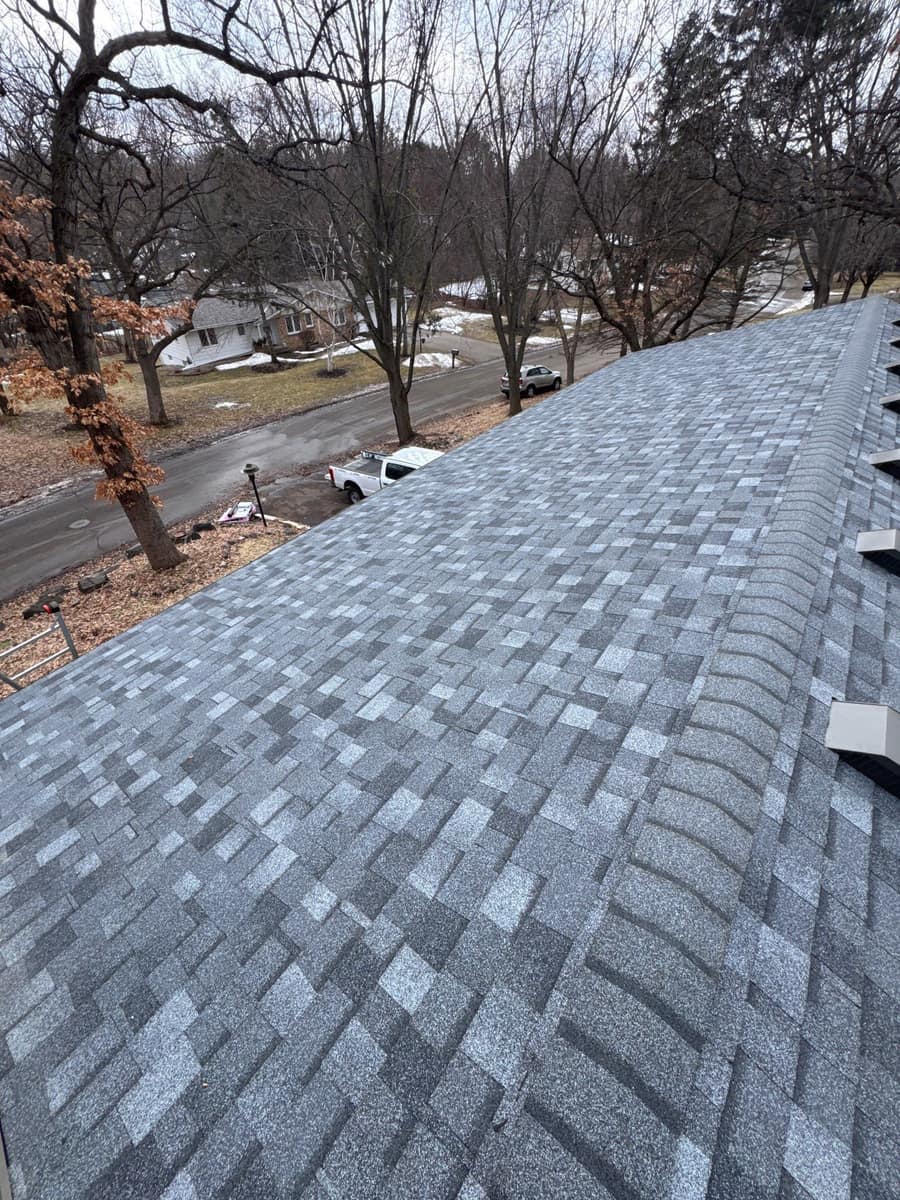
We check intake and exhaust from outside and look for frost, staining and blocked soffits in the attic where it is accessible, with photos.
You see what is wrong, what it is causing, and whether ventilation, insulation or both should come first.
We open or add intake, install ridge vent or properly sized exhaust, replace damaged vents, and point out any fans that end in the attic.
If the roof is due, ventilation is part of the job. Every replacement package includes ridge ventilation.
Ventilation work on an existing roof is quoted after a free inspection. The price depends on roof layout, how much intake the soffits can provide, the type and amount of exhaust needed, and whether damaged vents or decking have to be replaced along the way. You get the quote in writing before any work starts.
If the roof is near the end of its life anyway, doing the ventilation with the replacement is usually the better value. Every replacement package includes ridge ventilation along with synthetic underlayment and ice and water shield, and packages start from $12,838. See the pricing page for what each level includes.
Common signs are ice dams, frost on the underside of the roof deck or on nail tips in winter, musty smells, and shingles aging faster than they should. A free inspection checks the intake, the exhaust and the attic conditions.
A continuous ridge vent paired with enough soffit intake usually moves air most evenly. Box vents work too when they are sized correctly. What matters most is balance between intake and exhaust, and not mixing exhaust types that work against each other.
Not always. Ice dams start with heat escaping into the attic, so insulation and air sealing matter as much as airflow. We tell you which your house needs first.
Yes. Intake and exhaust can often be added or corrected on an existing roof. If the roof is near the end of its life, doing ventilation with the replacement is usually the better value.
Yes. Every replacement package includes ridge ventilation along with synthetic underlayment and ice and water shield.
From 1920s houses in St. Cloud to 2000s two-stories along I-94 and lake homes in the Brainerd Lakes, attic airflow problems look different in every housing era. Pick your city for local details.
Not on the list? We check attics anywhere within 125 miles of St. Cloud. All service areas →
Clear this winter's dam safely, then fix the attic conditions that built it.
Learn More →Ridge ventilation, synthetic underlayment and ice and water shield on every package.
Learn More →Reflashing and replacement for skylights, another common source of winter moisture.
Learn More →A free inspection of your roof and ventilation, photos of what we find, and a straight answer on what to fix first.
Prefer to talk now? Call (320) 828-7244